Hans
Hinterreiter

1902 – 1989

Pionier der Konkreten Kunst. Die Stiftung bewahrt und erschliesst den künstlerischen Nachlass des Winterthurer Malers, Theoretikers und Farbforschers.

Pioneer of Concrete Art. The Foundation preserves and opens up the artistic estate of the Winterthur-born painter, theorist and colour researcher.

Pionero del arte concreto. La Fundación conserva y difunde el legado artístico del pintor, teórico e investigador del color nacido en Winterthur.

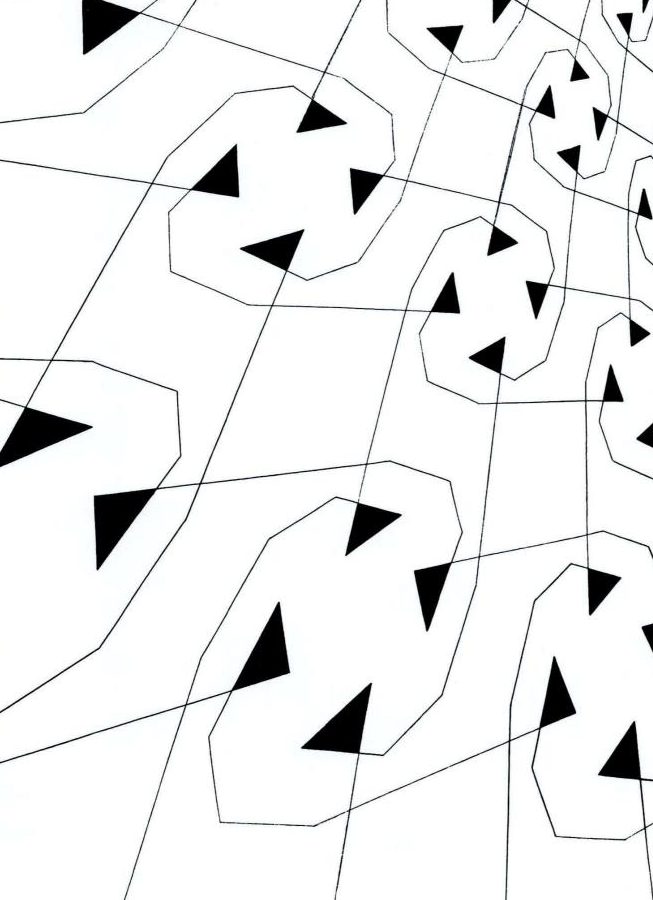
Hans Hinterreiter, Opus 21, 1972
Hans Hinterreiter, Opus 21, 1972, GemäldeHans Hinterreiter, Opus 21, 1972, paintingHans Hinterreiter, Opus 21, 1972, pintura
Max Bill
«die konstruktive logik, sowohl bezüglich formentwicklung als auch bezüglich farbsystematik, ist bei hans hinterreiter in unerwartetem reichtum und hervorragender perfektion durchgeführt.»“the constructive logic, both in the development of form and in the systematics of colour, is carried through in hans hinterreiter’s work with unexpected richness and outstanding perfection.”«la lógica constructiva, tanto en el desarrollo de la forma como en la sistemática del color, está llevada a cabo en hans hinterreiter con una riqueza inesperada y una perfección extraordinaria.»Max Bill über Hans HinterreiterMax Bill on Hans HinterreiterMax Bill sobre Hans Hinterreiter
01

Der KünstlerThe ArtistEl artista

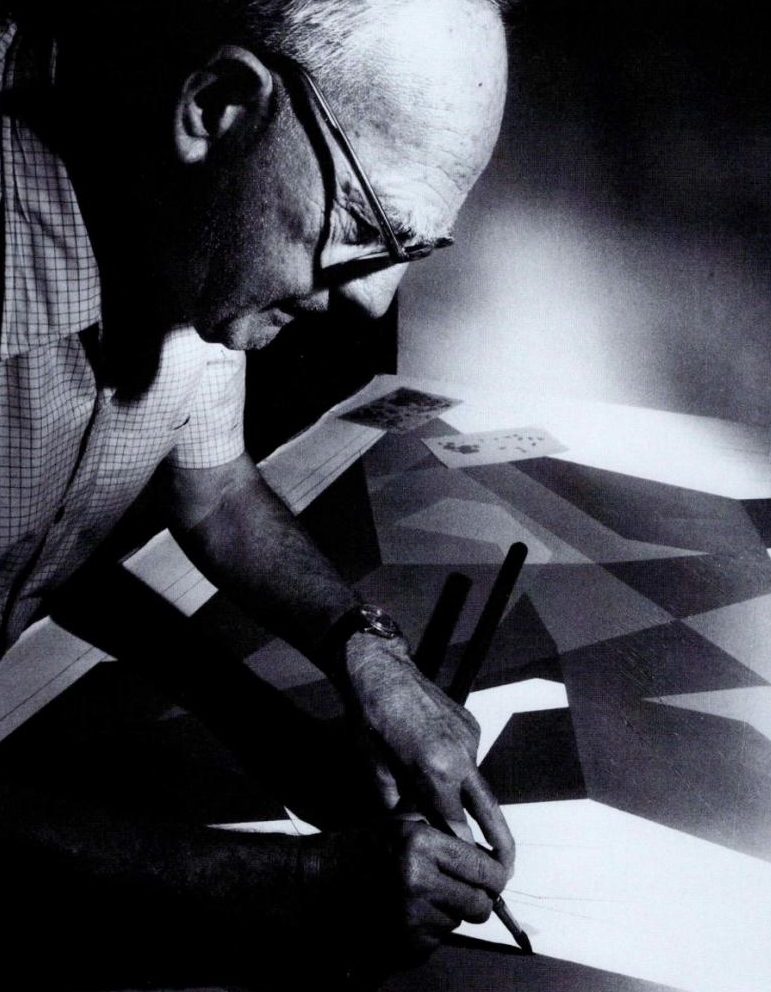
Hans Hinterreiter in seinem Atelier auf Ibiza, 1983
Hans Hinterreiter auf Ibiza, 1983
Foto: Michael von Graffenried
Hans Hinterreiter in Ibiza, 1983
Photo: Michael von Graffenried
Hans Hinterreiter en Ibiza, 1983
Foto: Michael von Graffenried

Hans Hinterreiter wird 1902 in Winterthur geboren. Er studiert zunächst Mathematik an der Universität Zürich, dann Architektur an der ETH, und ist ein so begabter Pianist, dass er als junger Mann davon träumt, Musiker zu werden. Nach wenigen Jahren in Architekturbüros entscheidet er sich 1929 für die Malerei und zieht sich für Jahre in eine Alphütte auf dem Seelisberg zurück. Dort beginnt er, Farbe und Form mit wissenschaftlicher Gründlichkeit zu untersuchen – angeleitet von den Schriften des Chemikers und Nobelpreisträgers Wilhelm Ostwald.

Hans Hinterreiter was born in Winterthur in 1902. He first studied mathematics at the University of Zurich, then architecture at the ETH, and was so gifted a pianist that as a young man he dreamed of becoming a musician. After a few years in architectural offices he chose painting in 1929 and withdrew for years to an alpine hut on the Seelisberg. There he began to investigate colour and form with scientific rigour, guided by the writings of the chemist and Nobel laureate Wilhelm Ostwald.

Hans Hinterreiter nace en Winterthur en 1902. Estudia primero matemáticas en la Universidad de Zúrich y después arquitectura en la ETH; es un pianista tan dotado que de joven sueña con ser músico. Tras unos años en estudios de arquitectura, en 1929 opta por la pintura y se retira durante años a una cabaña alpina en el Seelisberg. Allí empieza a investigar el color y la forma con rigor científico, guiado por los escritos del químico y premio Nobel Wilhelm Ostwald.

1930 entstehen seine ersten völlig ungegenständlichen Werke: handgrosse, mit Tempera auf Papier gemalte Form- und Farbkonstrukte, die er bescheiden «Studien» nennt. In der Schweiz gibt es zu diesem Zeitpunkt keinen gleichaltrigen Künstler, der sich so konsequent von der Tradition gelöst hat; selbst Max Bill wendet sich erst 1935 der «mathematischen Denkweise» zu. Bill, ebenfalls Winterthurer, wird Hinterreiters lebenslanger Fürsprecher: Er holt ihn 1937 in die «Allianz», lädt ihn 1941 zur Mappe «5 constructionen + 5 compositionen» ein und organisiert von der Schweiz aus dessen Ausstellungsbeteiligungen.

His first entirely non-representational works date from 1930: hand-sized constructions of form and colour in tempera on paper, which he modestly called “studies”. No Swiss artist of his generation had broken so consistently with tradition at that point; even Max Bill did not turn to the “mathematical way of thinking” until 1935. Bill, also from Winterthur, became Hinterreiter’s lifelong advocate: he brought him into the “Allianz” in 1937, invited him to contribute to the portfolio “5 constructionen + 5 compositionen” in 1941 and organised his exhibition appearances from Switzerland.

En 1930 surgen sus primeras obras completamente no figurativas: construcciones de forma y color del tamaño de una mano, pintadas al temple sobre papel, que él llama modestamente «estudios». En Suiza no hay en ese momento ningún artista de su generación que se haya desligado de la tradición con tanta coherencia; el propio Max Bill no adopta el «pensamiento matemático» hasta 1935. Bill, también de Winterthur, será el defensor de Hinterreiter durante toda su vida: lo incorpora a la «Allianz» en 1937, lo invita en 1941 a la carpeta «5 constructionen + 5 compositionen» y organiza desde Suiza sus participaciones en exposiciones.

Denn seit 1939 lebt Hinterreiter dauerhaft auf Ibiza – zurückgezogen, ohne Interesse an Vermarktung und Kunstbetrieb. Auf einer Farm in Santa Eulalia arbeitet er an Bildern, die er als «visualisierte Musik» versteht: streng kontrapunktisch aufgebaute Fugen aus Formen und Farben, deren Partitur in Form einer algebraischen Formel auf der Montierung jeder Studie festgehalten ist. Durch Drehung, Überlagerung und Spiegelung entstehen sich verdichtende oder ausdehnende Flächenrhythmen, die Bewegung und Raum ins Bild bringen – in der konkreten Kunst jener Zeit einzigartig und den Prinzipien der Op Art um Jahrzehnte voraus.

For from 1939 Hinterreiter lived permanently in Ibiza – withdrawn, indifferent to the art market and its institutions. On a farm in Santa Eulalia he worked on paintings he understood as “visualised music”: strictly contrapuntal fugues of forms and colours whose score, in the form of an algebraic formula, is recorded on the mount of each study. Rotation, superimposition and mirroring generate condensing or expanding rhythms that bring movement and space into the picture – unique in the Concrete art of the period and decades ahead of the principles of Op Art.

Desde 1939 Hinterreiter vive de forma permanente en Ibiza, retirado y sin interés por el mercado ni por el mundo del arte. En una finca de Santa Eulalia trabaja en cuadros que entiende como «música visualizada»: fugas de formas y colores construidas con rigor contrapuntístico, cuya partitura, en forma de fórmula algebraica, queda anotada en el montaje de cada estudio. Mediante rotación, superposición y reflejo surgen ritmos que se condensan o se expanden y que introducen movimiento y espacio en la imagen: algo único en el arte concreto de la época y décadas por delante de los principios del Op Art.

Die öffentliche Anerkennung kommt spät. 1973 richtet das Kunstmuseum Winterthur unter Rudolf Koella die erste Museumsretrospektive aus, 1984 folgt das Josef Albers Museum in Bottrop, 1988 das Solomon R. Guggenheim Museum in New York. Hinterreiter stirbt 1989 im Alter von 87 Jahren auf Ibiza. Sein künstlerischer Nachlass geht an die Hans Hinterreiter Stiftung.

Public recognition came late. In 1973 the Kunstmuseum Winterthur under Rudolf Koella mounted the first museum retrospective, followed by the Josef Albers Museum in Bottrop in 1984 and the Solomon R. Guggenheim Museum in New York in 1988. Hinterreiter died in Ibiza in 1989 at the age of 87. His artistic estate passed to the Hans Hinterreiter Foundation.

El reconocimiento público llega tarde. En 1973 el Kunstmuseum Winterthur, dirigido por Rudolf Koella, organiza la primera retrospectiva museística; le siguen el Josef Albers Museum de Bottrop en 1984 y el Solomon R. Guggenheim Museum de Nueva York en 1988. Hinterreiter muere en Ibiza en 1989, a los 87 años. Su legado artístico pasa a la Fundación Hans Hinterreiter.

02

WerkWorkObra

Studie 95Study 95Estudio 95, 1932
Tempera auf Papier, 10,7 × 15,2 cmTempera on paper, 10,7 × 15,2 cmTemple sobre papel, 10,7 × 15,2 cm
Hans Hinterreiter Stiftung, ZürichHans Hinterreiter Stiftung, ZurichFundación Hans Hinterreiter, Zúrich
ME 43 BME 43 BME 43 B, 1932
Tempera auf PapierTempera on paperTemple sobre papel
Hans Hinterreiter Stiftung, ZürichHans Hinterreiter Stiftung, ZurichFundación Hans Hinterreiter, Zúrich
Studie 123Study 123Estudio 123, 1933
Tempera auf PapierTempera on paperTemple sobre papel
Hans Hinterreiter Stiftung, ZürichHans Hinterreiter Stiftung, ZurichFundación Hans Hinterreiter, Zúrich
Opus 10Opus 10Opus 10, 1951
Tempera auf Papier, 26,5 × 23 cmTempera on paper, 26,5 × 23 cmTemple sobre papel, 26,5 × 23 cm
Hans Hinterreiter Stiftung, ZürichHans Hinterreiter Stiftung, ZurichFundación Hans Hinterreiter, Zúrich
Opus 12Opus 12Opus 12, 1952
Tempera (gefirnisst) auf Pavatex, ca. 83 × 63 cmTempera (varnished) on Pavatex, ca. 83 × 63 cmTemple (barnizado) sobre Pavatex, ca. 83 × 63 cm
Hans Hinterreiter Stiftung, ZürichHans Hinterreiter Stiftung, ZurichFundación Hans Hinterreiter, Zúrich
Opus 79Opus 79Opus 79, 1958
Tempera (gefirnisst) auf Pavatex, 82,5 × 82,5 cmTempera (varnished) on Pavatex, 82,5 × 82,5 cmTemple (barnizado) sobre Pavatex, 82,5 × 82,5 cm
Hans Hinterreiter Stiftung, ZürichHans Hinterreiter Stiftung, ZurichFundación Hans Hinterreiter, Zúrich
E 45E 45E 45, 1958/72
GemäldePaintingPintura
Hans Hinterreiter Stiftung, ZürichHans Hinterreiter Stiftung, ZurichFundación Hans Hinterreiter, Zúrich
Opus 112Opus 112Opus 112, 1959
Tempera (gefirnisst) auf Pavatex, 66,3 × 83 cmTempera (varnished) on Pavatex, 66,3 × 83 cmTemple (barnizado) sobre Pavatex, 66,3 × 83 cm
Hans Hinterreiter Stiftung, ZürichHans Hinterreiter Stiftung, ZurichFundación Hans Hinterreiter, Zúrich
Opus 104Opus 104Opus 104, 1959
GouacheGouacheGouache
Hans Hinterreiter Stiftung, ZürichHans Hinterreiter Stiftung, ZurichFundación Hans Hinterreiter, Zúrich
Opus 87 COpus 87 COpus 87 C, 1960
Tempera (gefirnisst) auf Pavatex, 73 × 73 cmTempera (varnished) on Pavatex, 73 × 73 cmTemple (barnizado) sobre Pavatex, 73 × 73 cm
Hans Hinterreiter Stiftung, ZürichHans Hinterreiter Stiftung, ZurichFundación Hans Hinterreiter, Zúrich
Opus 119Opus 119Opus 119, 1960
Tempera auf Papier, 27,6 × 37,8 cmTempera on paper, 27,6 × 37,8 cmTemple sobre papel, 27,6 × 37,8 cm
Hans Hinterreiter Stiftung, ZürichHans Hinterreiter Stiftung, ZurichFundación Hans Hinterreiter, Zúrich
Opus 115Opus 115Opus 115, 1960
GouacheGouacheGouache
Hans Hinterreiter Stiftung, ZürichHans Hinterreiter Stiftung, ZurichFundación Hans Hinterreiter, Zúrich
Opus 137 BOpus 137 BOpus 137 B, 1961/71
GouacheGouacheGouache
Hans Hinterreiter Stiftung, ZürichHans Hinterreiter Stiftung, ZurichFundación Hans Hinterreiter, Zúrich
Opus 152Opus 152Opus 152, 1962
Plastiktempera auf Papier, 28 × 35 cmPlastic tempera on paper, 28 × 35 cmTemple plástico sobre papel, 28 × 35 cm
Hans Hinterreiter Stiftung, ZürichHans Hinterreiter Stiftung, ZurichFundación Hans Hinterreiter, Zúrich
Opus 62 AOpus 62 AOpus 62 A, 1966
GouacheGouacheGouache
Hans Hinterreiter Stiftung, ZürichHans Hinterreiter Stiftung, ZurichFundación Hans Hinterreiter, Zúrich
Opus 5 BOpus 5 BOpus 5 B, 1970
GouacheGouacheGouache
Hans Hinterreiter Stiftung, ZürichHans Hinterreiter Stiftung, ZurichFundación Hans Hinterreiter, Zúrich
Opus 63 COpus 63 COpus 63 C, 1974
Plastiktempera auf Papier, ⌀ 30 cmPlastic tempera on paper, ⌀ 30 cmTemple plástico sobre papel, ⌀ 30 cm
Hans Hinterreiter Stiftung, ZürichHans Hinterreiter Stiftung, ZurichFundación Hans Hinterreiter, Zúrich
Opus 130 BOpus 130 BOpus 130 B, 1977
Acryl auf Papier, ⌀ 29,8 cmAcrylic on paper, ⌀ 29,8 cmAcrílico sobre papel, ⌀ 29,8 cm
Hans Hinterreiter Stiftung, ZürichHans Hinterreiter Stiftung, ZurichFundación Hans Hinterreiter, Zúrich
Opus 48 COpus 48 COpus 48 C, 1975–1980
Acryl auf Leinwand, 90 × 90 cmAcrylic on canvas, 90 × 90 cmAcrílico sobre lienzo, 90 × 90 cm
Hans Hinterreiter Stiftung, ZürichHans Hinterreiter Stiftung, ZurichFundación Hans Hinterreiter, Zúrich
03

MethodeMethodMétodo

Hinterreiters Arbeitsweise nimmt vorweg, was der Computer später mühelos leistet: die systematische Kombination elementarer Formen und vorprogrammierter Farbakkorde.Hinterreiter’s working method anticipates what the computer would later do effortlessly: the systematic combination of elementary forms and pre-programmed colour chords.El método de trabajo de Hinterreiter anticipa lo que más tarde el ordenador haría sin esfuerzo: la combinación sistemática de formas elementales y acordes de color preprogramados.

FarborgelColour OrganÓrgano de colores

Auf Anregung Wilhelm Ostwalds legt Hinterreiter eine «Farborgel» an: einen weiss gestrichenen Holzkasten mit einer Vielzahl schmaler Schubladen, in denen – nach Ostwalds Farbatlas geordnet – Farbpulver aus dessen Farblabor in Grossbothen bei Dresden lagern. Wie eine Orgel soll sie dem Künstler erlauben, im Nu harmonische Akkorde zu erzeugen. Die Farborgel ist bis heute erhalten.

At Wilhelm Ostwald’s suggestion Hinterreiter built a “colour organ”: a white-painted wooden cabinet with numerous narrow drawers holding pigment powders from Ostwald’s colour laboratory in Grossbothen near Dresden, arranged according to his colour atlas. Like an organ, it was to let the artist produce harmonious chords in an instant. The colour organ survives to this day.

Por sugerencia de Wilhelm Ostwald, Hinterreiter construye un «órgano de colores»: un armario de madera pintado de blanco con numerosos cajones estrechos en los que, ordenados según el atlas de colores de Ostwald, se guardan pigmentos en polvo procedentes de su laboratorio en Grossbothen, cerca de Dresde. Como un órgano, debía permitir al artista producir acordes armónicos al instante. El órgano de colores se conserva hasta hoy.

FormorgelForm OrganÓrgano de formas

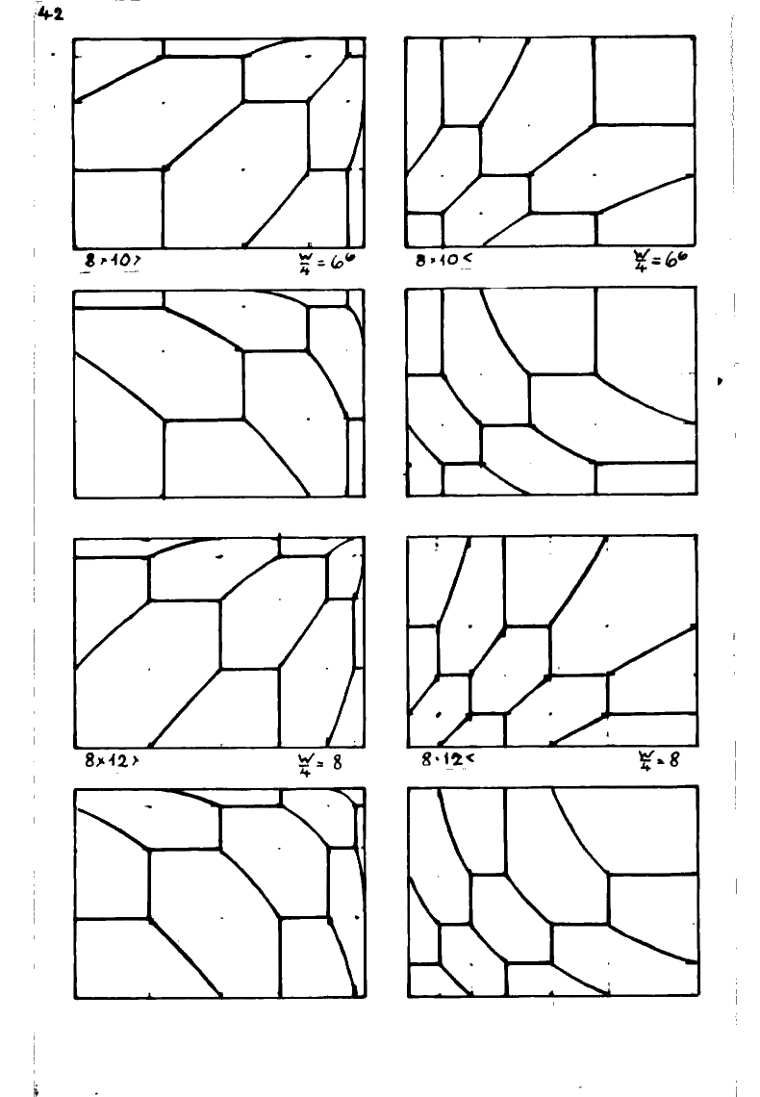
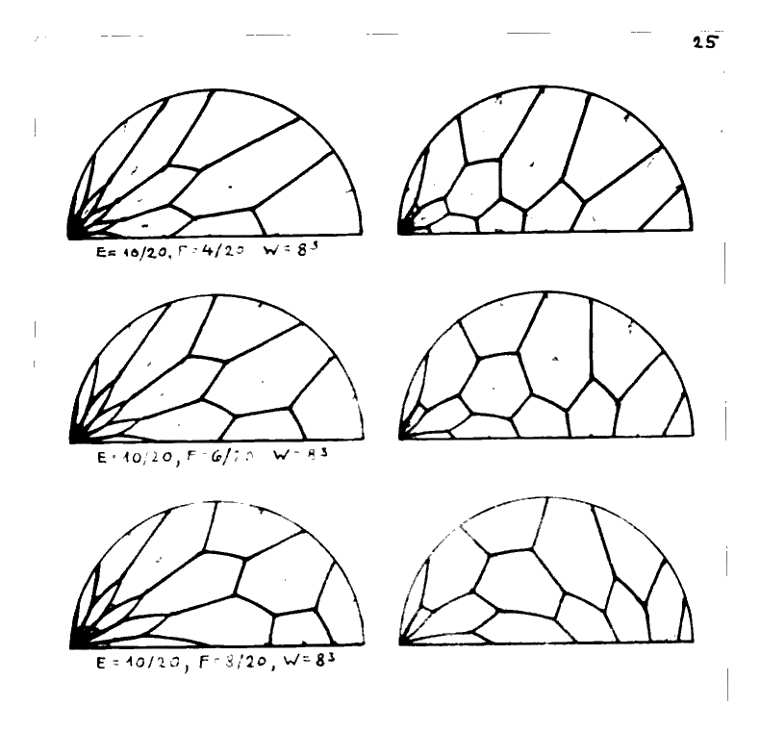
In jahrelanger Arbeit entsteht das Gegenstück für die Form: Hunderte handgrosse Transparentpapiere, auf die Hinterreiter mit Feder und Tusche rhythmisch versetzte geometrische Figuren zeichnet. Übereinandergelegt ergeben sie hochkomplexe «Netze», die er, wenn er sie für bildtauglich hält, mit einer Blaupause festhält und mithilfe der Farborgel in Farbe umsetzt.

Over years of work the counterpart for form took shape: hundreds of hand-sized sheets of tracing paper on which Hinterreiter drew rhythmically offset geometric figures in pen and ink. Superimposed, they yield highly complex “nets”, which he fixed as blueprints when he judged them fit for a picture and then translated into colour with the help of the colour organ.

A lo largo de años de trabajo nace el equivalente para la forma: cientos de papeles transparentes del tamaño de una mano sobre los que Hinterreiter dibuja a pluma y tinta figuras geométricas desplazadas rítmicamente. Superpuestos, generan «redes» de gran complejidad que, cuando las considera aptas para un cuadro, fija en una cianotipia y traduce en color con ayuda del órgano de colores.

Form- und FarbwandelspielPlay of Changing Form and ColourJuego de mutación de forma y color

Schon 1934 träumt Hinterreiter davon, seine Muster mittels Projektion und Musik in pausenlosen Abläufen zu bewegen – ein kaleidoskopisches «Laufbild», das nicht mehr gemalt werden müsste. Die Theorie dazu formuliert er in «Die Kunst der reinen Form» (1930–1948, publiziert 1978). Realisiert wurde die Idee erst 2011, als Urs B. Roth im Auftrag der Stiftung Werke Hinterreiters in einem computergenerierten Film in Bewegung versetzte.

As early as 1934 Hinterreiter dreamed of setting his patterns in continuous motion through projection and music – a kaleidoscopic “moving picture” that would no longer need to be painted. He set out the theory in “Die Kunst der reinen Form” (1930–1948, published 1978). The idea was only realised in 2011, when Urs B. Roth, commissioned by the Foundation, set Hinterreiter’s works in motion in a computer-generated film.

Ya en 1934 Hinterreiter sueña con poner sus patrones en movimiento continuo mediante proyección y música: una «imagen en movimiento» caleidoscópica que ya no habría que pintar. Formula la teoría en «Die Kunst der reinen Form» (1930–1948, publicado en 1978). La idea no se realizó hasta 2011, cuando Urs B. Roth, por encargo de la Fundación, animó obras de Hinterreiter en una película generada por ordenador.

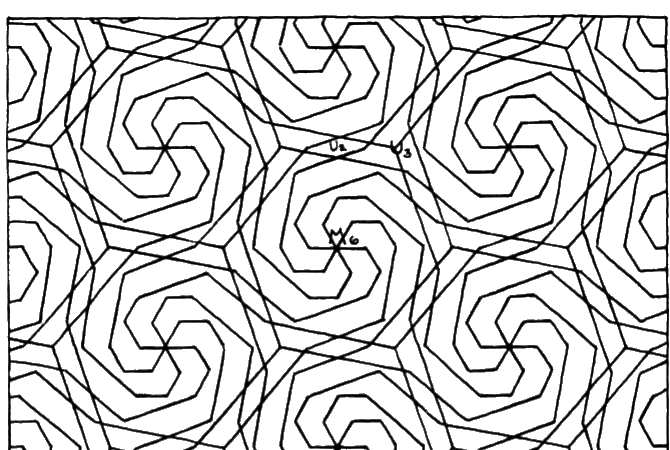
Konstruktionszeichnung zu Opus 21Construction drawing for Opus 21Dibujo de construcción para Opus 21
Tuschfeder auf TransparentpapierPen and ink on tracing paperTinta sobre papel transparente
Konstruktionszeichnung zu Opus 27Construction drawing for Opus 27Dibujo de construcción para Opus 27
Tuschfeder auf TransparentpapierPen and ink on tracing paperTinta sobre papel transparente
04

BiographieBiographyBiografía

Nach Rudolf KoellaAfter Rudolf KoellaSegún Rudolf Koella
  • 1902Geboren in Winterthur als Sohn eines österreichischen Schneiders und einer Schweizerin. Am Gymnasium Freundschaft mit dem späteren Komponisten und Musikhistoriker Willy Hess.Born in Winterthur, the son of an Austrian tailor and a Swiss mother. At grammar school he befriends the future composer and music historian Willy Hess.Nace en Winterthur, hijo de un sastre austriaco y de madre suiza. En el instituto traba amistad con el futuro compositor y musicólogo Willy Hess.
  • 1920Mathematikstudium an der Universität Zürich, dann Wechsel an die Architekturabteilung der ETH. Erste Malstunden bei Wilhelm Ludwig Lehmann.Studies mathematics at the University of Zurich, then transfers to the architecture department of the ETH. First painting lessons with Wilhelm Ludwig Lehmann.Estudia matemáticas en la Universidad de Zúrich y pasa después al departamento de arquitectura de la ETH. Primeras clases de pintura con Wilhelm Ludwig Lehmann.
  • 1925Diplom. Arbeit in Architekturbüros in Aarau und Bern; in Aarau lernt er die Lehrerin Mina Salm kennen, die er 1929 heiratet.Diploma. Works in architectural offices in Aarau and Bern; in Aarau he meets the teacher Mina Salm, whom he marries in 1929.Se diploma. Trabaja en estudios de arquitectura en Aarau y Berna; en Aarau conoce a la maestra Mina Salm, con quien se casa en 1929.
  • 1929Aufgabe des Brotberufs. Rückzug in eine Alphütte auf dem Seelisberg. Auseinandersetzung mit Wilhelm Ostwalds «Harmonie der Farben» und «Harmonie der Formen».Gives up his profession. Retreats to an alpine hut on the Seelisberg. Engages with Wilhelm Ostwald’s “Harmonie der Farben” and “Harmonie der Formen”.Abandona la profesión. Se retira a una cabaña alpina en el Seelisberg. Estudia «Harmonie der Farben» y «Harmonie der Formen» de Wilhelm Ostwald.
  • 1930Erste völlig ungegenständliche Werke: kleine Tempera-Studien auf Fabriano-Papier. Beginn der Formorgel; brieflicher Kontakt mit Ostwald.First entirely non-representational works: small tempera studies on Fabriano paper. Begins the form organ; correspondence with Ostwald.Primeras obras completamente no figurativas: pequeños estudios al temple sobre papel Fabriano. Inicio del órgano de formas; correspondencia con Ostwald.
  • 1934Reise durch Südspanien; Begeisterung für die maurische Ornamentik. Idee des «Form- und Farbwandelspiels».Travels through southern Spain; enthusiasm for Moorish ornament. Conceives the “play of changing form and colour”.Viaje por el sur de España; entusiasmo por la ornamentación morisca. Idea del «juego de mutación de forma y color».
  • 1935Übersiedlung nach Ibiza. Ein Jahr später Rückkehr in die Schweiz wegen des Spanischen Bürgerkriegs. 1936 Begegnung mit Max Bill in der Ausstellung «Zeitprobleme in der Schweizer Malerei und Plastik» im Kunsthaus Zürich.Moves to Ibiza. Returns to Switzerland a year later because of the Spanish Civil War. In 1936 meets Max Bill at the exhibition “Zeitprobleme in der Schweizer Malerei und Plastik” at the Kunsthaus Zürich.Se traslada a Ibiza. Un año después regresa a Suiza a causa de la Guerra Civil española. En 1936 se encuentra con Max Bill en la exposición «Zeitprobleme in der Schweizer Malerei und Plastik» del Kunsthaus Zürich.
  • 1937Mitglied der «Allianz», Vereinigung moderner Schweizer Künstler.Member of the “Allianz”, association of modern Swiss artists.Miembro de la «Allianz», asociación de artistas suizos modernos.
  • 1939Tod seiner Frau Mina. Endgültige Rückkehr nach Ibiza. Auf Anregung Bills Übertragung der Studien in grosse Formate, Tempera auf Karton und Pavatex.Death of his wife Mina. Final return to Ibiza. At Bill’s suggestion he transfers the studies to large formats, tempera on cardboard and Pavatex.Muerte de su esposa Mina. Regreso definitivo a Ibiza. Por sugerencia de Bill traslada los estudios a grandes formatos, temple sobre cartón y Pavatex.
  • 1941Erste Farblithographie für Max Bills Mappe «5 constructionen + 5 compositionen» (Allianz-Verlag). 1942 erste Ausstellungsbeteiligung im Kunsthaus Zürich; weitere Allianz-Ausstellungen in Basel, St. Gallen, Mailand und Paris.First colour lithograph for Max Bill’s portfolio “5 constructionen + 5 compositionen” (Allianz-Verlag). First exhibition participation at the Kunsthaus Zürich in 1942; further Allianz exhibitions in Basel, St. Gallen, Milan and Paris.Primera litografía en color para la carpeta de Max Bill «5 constructionen + 5 compositionen» (Allianz-Verlag). En 1942 primera participación en una exposición en el Kunsthaus Zürich; otras exposiciones de la Allianz en Basilea, San Galo, Milán y París.
  • 1953Erwerb einer Farm in Santa Eulalia; deren Umbau beansprucht ihn ein Jahrzehnt lang.Acquires a farm in Santa Eulalia; its conversion occupies him for a decade.Adquiere una finca en Santa Eulalia; su reforma lo ocupa durante una década.
  • 1958Die Hostmann-Steinbergschen Farbenfabriken, Celle, geben die Mappe «Geometrische Schönheit» heraus, mit einem Geleitwort von Grete Ostwald.The Hostmann-Steinberg ink works, Celle, publish the portfolio “Geometrische Schönheit”, with a preface by Grete Ostwald.Las fábricas de colores Hostmann-Steinberg de Celle publican la carpeta «Geometrische Schönheit», con prólogo de Grete Ostwald.
  • 1963Heirat mit Inge von Carlowitz. Rückkehr zur Malerei; grössere Formate, zunehmend Acryl auf Leinwand.Marries Inge von Carlowitz. Returns to painting; larger formats, increasingly acrylic on canvas.Se casa con Inge von Carlowitz. Vuelve a la pintura; formatos mayores, cada vez más acrílico sobre lienzo.
  • 1967Erstes Buch über Hinterreiter, herausgegeben von Carl van der Voort, Ibiza. Bis Ende der siebziger Jahre entstehen über fünfzig Serigraphien und Lithographien.First book on Hinterreiter, published by Carl van der Voort, Ibiza. By the end of the 1970s he produces more than fifty screenprints and lithographs.Primer libro sobre Hinterreiter, editado por Carl van der Voort, Ibiza. Hasta finales de los años setenta realiza más de cincuenta serigrafías y litografías.
  • 1973Erste Museumsretrospektive im Kunstmuseum Winterthur (Rudolf Koella).First museum retrospective at the Kunstmuseum Winterthur (Rudolf Koella).Primera retrospectiva museística en el Kunstmuseum Winterthur (Rudolf Koella).
  • 1977Der Zürcher Galerist Istvan Schlegl beginnt, sich für das Werk einzusetzen; 1982 erscheint die Monographie im Waser-Verlag.The Zurich gallerist Istvan Schlegl begins to champion the work; the monograph appears with Waser-Verlag in 1982.El galerista zuriqués Istvan Schlegl empieza a promover la obra; en 1982 aparece la monografía en Waser-Verlag.
  • 1984Erste deutsche Museumsausstellung im Josef Albers Museum, Quadrat Bottrop.First German museum exhibition at the Josef Albers Museum, Quadrat Bottrop.Primera exposición museística en Alemania, Josef Albers Museum, Quadrat Bottrop.
  • 1985Gründung der Hans Hinterreiter Stiftung in Vaduz.Foundation of the Hans Hinterreiter Stiftung in Vaduz.Constitución de la Fundación Hans Hinterreiter en Vaduz.
  • 1988Retrospektive «Works 1930–1985» im Solomon R. Guggenheim Museum, New York.Retrospective “Works 1930–1985” at the Solomon R. Guggenheim Museum, New York.Retrospectiva «Works 1930–1985» en el Solomon R. Guggenheim Museum de Nueva York.
  • 1989Hans Hinterreiter stirbt auf Ibiza im Alter von 87 Jahren. Der Nachlass geht an die Stiftung.Hans Hinterreiter dies in Ibiza at the age of 87. The estate passes to the Foundation.Hans Hinterreiter muere en Ibiza a los 87 años. El legado pasa a la Fundación.
05

Die StiftungThe FoundationLa Fundación

Gegründet 1985 in Vaduz, heute mit Sitz in Zürich. Alleinerbin des künstlerischen Nachlasses.Established in Vaduz in 1985, today based in Zurich. Sole heir to the artistic estate.Constituida en Vaduz en 1985, hoy con sede en Zúrich. Heredera única del legado artístico.

Die Hans Hinterreiter Stiftung verwahrt den künstlerischen Nachlass von Hans Hinterreiter: Gemälde, Studien, Konstruktionszeichnungen, Druckgraphik, die Farb- und Formorgel sowie die Manuskripte seiner Formenlehre. Sie macht dieses Werk zugänglich – durch Ausstellungen mit Museen und Galerien, durch Publikationen und durch die wissenschaftliche Erschliessung des Bestandes.

The Hans Hinterreiter Foundation holds the artist’s estate: paintings, studies, construction drawings, prints, the colour and form organs and the manuscripts of his theory of form. It makes this work accessible through exhibitions with museums and galleries, through publications and through the scholarly cataloguing of the holdings.

La Fundación Hans Hinterreiter custodia el legado artístico del artista: pinturas, estudios, dibujos de construcción, obra gráfica, los órganos de color y de forma y los manuscritos de su teoría de la forma. Hace accesible esta obra mediante exposiciones con museos y galerías, publicaciones y la catalogación científica de los fondos.

Hauptzweck der Stiftung ist die Pflege des künstlerischen Erbes von Hans Hinterreiter sowie die Förderung und Verbreitung seiner Ideen im In- und Ausland. Sie erfüllt ihren Zweck durch:

The principal aim of the Foundation is to care for the artistic legacy of Hans Hinterreiter and to promote and disseminate his ideas in Switzerland and abroad. It fulfils this purpose through:

La finalidad principal de la Fundación es cuidar el legado artístico de Hans Hinterreiter y promover y difundir sus ideas en Suiza y en el extranjero. Cumple este fin mediante:

  • Ausstellungen und Informationsveranstaltungen zum Werk Hans Hinterreiters in der Schweiz und im Ausland
  • exhibitions and information events on the work of Hans Hinterreiter in Switzerland and abroad
  • exposiciones y actos informativos sobre la obra de Hans Hinterreiter en Suiza y en el extranjero
  • die Herausgabe von Büchern und Katalogen zum Werk
  • the publication of books and catalogues on the work
  • la edición de libros y catálogos sobre la obra
  • Schenkungen oder Leihgaben von Werken an Museen im In- und Ausland
  • donations or loans of works to museums in Switzerland and abroad
  • donaciones o préstamos de obras a museos en Suiza y en el extranjero
  • Förderbeiträge an Künstlerinnen, Künstler und Wissenschaftler, die Hinterreiters Ideen weiterverfolgen
  • grants to artists and scholars who pursue Hinterreiter’s ideas
  • ayudas a artistas e investigadores que continúan las ideas de Hinterreiter
  • Förderbeiträge an Ausstellungen, Seminare und Vorträge im In- und Ausland
  • grants to exhibitions, seminars and lectures in Switzerland and abroad
  • ayudas a exposiciones, seminarios y conferencias en Suiza y en el extranjero
  • die Zusammenarbeit mit Organisationen mit ähnlicher Zielsetzung
  • cooperation with organisations pursuing similar aims
  • la colaboración con organizaciones de objetivos afines

Seit ihrer Gründung hat die Stiftung unter anderem die Retrospektive in der Fondation Saner, Studen (1999/2000), den computergenerierten Film von Urs B. Roth (2011), die Ausstellung «Ein Pionier der Konkreten Kunst» in der Galerie Orlando, Zürich (2013/14) sowie die Ausstellungen der Fundación Juan March in Palma de Mallorca und Cuenca (2018) mit dem Katalog «Hans Hinterreiter» (Madrid 2018) ermöglicht. Die Urheberrechte des Künstlers werden durch ProLitteris, Zürich, wahrgenommen.

Since its establishment the Foundation has made possible, among other things, the retrospective at the Fondation Saner, Studen (1999/2000), the computer-generated film by Urs B. Roth (2011), the exhibition “A Pioneer of Concrete Art” at Galerie Orlando, Zurich (2013/14) and the exhibitions of the Fundación Juan March in Palma de Mallorca and Cuenca (2018) with the catalogue “Hans Hinterreiter” (Madrid 2018). The artist’s copyright is administered by ProLitteris, Zurich.

Desde su constitución, la Fundación ha hecho posibles, entre otros, la retrospectiva en la Fondation Saner de Studen (1999/2000), la película generada por ordenador de Urs B. Roth (2011), la exposición «Un pionero del arte concreto» en la Galerie Orlando de Zúrich (2013/14) y las exposiciones de la Fundación Juan March en Palma de Mallorca y Cuenca (2018), con el catálogo «Hans Hinterreiter» (Madrid 2018). Los derechos de autor del artista son gestionados por ProLitteris, Zúrich.

StiftungsratBoard of TrusteesPatronato
  • Dr. iur. Peter SchrammPräsidentPresidentPresidente
  • Larkin Erdmann M.A.MitgliedMemberVocal
  • Timo Niemeyer M.A.MitgliedMemberVocal
GründungEstablishedConstitución
1985, Vaduz1985, Vaduz1985, Vaduz
SitzSeatSede
ZürichZurichZúrich
ZweckPurposeFinalidad
Pflege des Nachlasses, Verbreitung der Ideen HinterreitersCare of the estate, dissemination of Hinterreiter’s ideasCuidado del legado, difusión de las ideas de Hinterreiter
06

Ausstellungen und PublikationenExhibitions and PublicationsExposiciones y publicaciones

Ausstellungen (Auswahl)Exhibitions (selection)Exposiciones (selección)

  • 1942Kunsthaus Zürich, AllianzKunsthaus Zürich, AllianzKunsthaus Zürich, Allianz
  • 1947Kunsthaus Zürich, Allianz; Kunstmuseum St. Gallen; Palazzo Reale, Mailand (Arte astratta e concreta)Kunsthaus Zürich, Allianz; Kunstmuseum St. Gallen; Palazzo Reale, Milan (Arte astratta e concreta)Kunsthaus Zürich, Allianz; Kunstmuseum St. Gallen; Palazzo Reale, Milán (Arte astratta e concreta)
  • 1948Salon des Réalités Nouvelles, ParisSalon des Réalités Nouvelles, ParisSalon des Réalités Nouvelles, París
  • 1960Helmhaus Zürich (Konkrete Kunst, 50 Jahre Entwicklung)Helmhaus Zürich (Konkrete Kunst, 50 Jahre Entwicklung)Helmhaus Zürich (Konkrete Kunst, 50 Jahre Entwicklung)
  • 1967Galería Carl van der Voort, Ibiza und San FranciscoGalería Carl van der Voort, Ibiza and San FranciscoGalería Carl van der Voort, Ibiza y San Francisco
  • 1968Ateneo, MadridAteneo, MadridAteneo, Madrid
  • 1970Neue Galerie, Baden-Baden; Galerie Fay & Nothelfer, BerlinNeue Galerie, Baden-Baden; Galerie Fay & Nothelfer, BerlinNeue Galerie, Baden-Baden; Galerie Fay & Nothelfer, Berlín
  • 1971Annely Juda Gallery, London; Galerie Henry Meyer, Lausanne; Galleria Milano, MailandAnnely Juda Gallery, London; Galerie Henry Meyer, Lausanne; Galleria Milano, MilanAnnely Juda Gallery, Londres; Galerie Henry Meyer, Lausana; Galleria Milano, Milán
  • 1972Galerie Liatowitsch, Basel (The Non-Objective World 1939–1955); Galerie Numaga, AuvernierGalerie Liatowitsch, Basel (The Non-Objective World 1939–1955); Galerie Numaga, AuvernierGalerie Liatowitsch, Basilea (The Non-Objective World 1939–1955); Galerie Numaga, Auvernier
  • 1973Kunstmuseum Winterthur, RetrospektiveKunstmuseum Winterthur, retrospectiveKunstmuseum Winterthur, retrospectiva
  • 1977Galerie Schlegl, Zürich, zum 75. GeburtstagGalerie Schlegl, Zurich, for the 75th birthdayGalerie Schlegl, Zúrich, por el 75.º cumpleaños
  • 1984Josef Albers Museum, Quadrat BottropJosef Albers Museum, Quadrat BottropJosef Albers Museum, Quadrat Bottrop
  • 1988Solomon R. Guggenheim Museum, New York, Retrospektive «Works 1930–1985»Solomon R. Guggenheim Museum, New York, retrospective “Works 1930–1985”Solomon R. Guggenheim Museum, Nueva York, retrospectiva «Works 1930–1985»
  • 1993Hiro Gallery, TokyoHiro Gallery, TokyoHiro Gallery, Tokio
  • 1997Galerie Schlegl, Zürich, KonstruktionszeichnungenGalerie Schlegl, Zurich, construction drawingsGalerie Schlegl, Zúrich, dibujos de construcción
  • 1999Fondation Saner, Studen bei Biel (bis 2000)Fondation Saner, Studen near Biel (until 2000)Fondation Saner, Studen, Biel (hasta 2000)
  • 2013Galerie Orlando, Zürich, «Ein Pionier der Konkreten Kunst» (bis 2014)Galerie Orlando, Zurich, “A Pioneer of Concrete Art” (until 2014)Galerie Orlando, Zúrich, «Un pionero del arte concreto» (hasta 2014)
  • 2018Museu Fundación Juan March, Palma de Mallorca, 21. Februar – 26. MaiMuseu Fundación Juan March, Palma de Mallorca, 21 February – 26 MayMuseu Fundación Juan March, Palma de Mallorca, 21 de febrero – 26 de mayo
  • 2018Museo de Arte Abstracto Español, Fundación Juan March, Cuenca, ab JuniMuseo de Arte Abstracto Español, Fundación Juan March, Cuenca, from JuneMuseo de Arte Abstracto Español, Fundación Juan March, Cuenca, desde junio

Schriften des KünstlersWritings by the artistEscritos del artista

  • Hans Hinterreiter, Geometrische Schönheit. Entstehung und Technik. Geleittext zu einer Mappe mit 30 Farbtafeln, hg. von den Hostmann-Steinbergschen Farbenfabriken, Celle 1958.
  • Hans Hinterreiter, Geometrische Schönheit. Entstehung und Technik. Accompanying text to a portfolio of 30 colour plates, published by Hostmann-Steinbergsche Farbenfabriken, Celle 1958.
  • Hans Hinterreiter, Geometrische Schönheit. Entstehung und Technik. Texto de acompañamiento a una carpeta de 30 láminas en color, ed. Hostmann-Steinbergsche Farbenfabriken, Celle 1958.
  • Hans Hinterreiter, A Theory of Form and Color. Ediciones Ebusus, Barcelona 1967.
  • Hans Hinterreiter, A Theory of Form and Color. Ediciones Ebusus, Barcelona 1967.
  • Hans Hinterreiter, A Theory of Form and Color. Ediciones Ebusus, Barcelona 1967.
  • Hans Hinterreiter, Die Kunst der reinen Form. Eine Formenlehre für moderne Künstler. Faksimile der fünfbändigen Abhandlung, Ediciones Ebusus, Ibiza / Amsterdam 1978.
  • Hans Hinterreiter, Die Kunst der reinen Form. Eine Formenlehre für moderne Künstler. Facsimile of the five-volume treatise, Ediciones Ebusus, Ibiza / Amsterdam 1978.
  • Hans Hinterreiter, Die Kunst der reinen Form. Eine Formenlehre für moderne Künstler. Facsímil del tratado en cinco volúmenes, Ediciones Ebusus, Ibiza / Ámsterdam 1978.

Publikationen über Hans HinterreiterPublications on Hans HinterreiterPublicaciones sobre Hans Hinterreiter

  • Kunstmuseum Winterthur, Hans Hinterreiter. Ausst.-Kat., Text von Rudolf Koella, 1973.
  • Kunstmuseum Winterthur, Hans Hinterreiter. Exh. cat., text by Rudolf Koella, 1973.
  • Kunstmuseum Winterthur, Hans Hinterreiter. Cat. exp., texto de Rudolf Koella, 1973.
  • Galerie Schlegl, Zürich, Das Werk von Hans Hinterreiter – zu seinem 75. Geburtstag. Ausst.-Kat., Texte von Max Bill und Rudolf Koella, 1977.
  • Galerie Schlegl, Zurich, Das Werk von Hans Hinterreiter – zu seinem 75. Geburtstag. Exh. cat., texts by Max Bill and Rudolf Koella, 1977.
  • Galerie Schlegl, Zúrich, Das Werk von Hans Hinterreiter – zu seinem 75. Geburtstag. Cat. exp., textos de Max Bill y Rudolf Koella, 1977.
  • Willy Rotzler, Konstruktive Konzepte. Zürich 1977.
  • Willy Rotzler, Konstruktive Konzepte. Zurich 1977.
  • Willy Rotzler, Konstruktive Konzepte. Zúrich 1977.
  • Emil Makovicky, The Crystallographic Art of Hans Hinterreiter. In: Zeitschrift für Kristallographie 150, 1979.
  • Emil Makovicky, The Crystallographic Art of Hans Hinterreiter. In: Zeitschrift für Kristallographie 150, 1979.
  • Emil Makovicky, The Crystallographic Art of Hans Hinterreiter. En: Zeitschrift für Kristallographie 150, 1979.
  • Kunstmuseum Winterthur, Dreissiger Jahre Schweiz. Konstruktive Kunst 1915–1945. Ausst.-Kat., Texte von Rudolf Koella und Ludmila Vachtova, 1981.
  • Kunstmuseum Winterthur, Dreissiger Jahre Schweiz. Konstruktive Kunst 1915–1945. Exh. cat., texts by Rudolf Koella and Ludmila Vachtova, 1981.
  • Kunstmuseum Winterthur, Dreissiger Jahre Schweiz. Konstruktive Kunst 1915–1945. Cat. exp., textos de Rudolf Koella y Ludmila Vachtova, 1981.
  • Hans Joachim Albrecht, Rudolf Koella, Hans Hinterreiter – Ein Schweizer Vertreter der konstruktiven Kunst. Waser-Verlag, Buchs/Zürich 1982.
  • Hans Joachim Albrecht, Rudolf Koella, Hans Hinterreiter – Ein Schweizer Vertreter der konstruktiven Kunst. Waser-Verlag, Buchs/Zurich 1982.
  • Hans Joachim Albrecht, Rudolf Koella, Hans Hinterreiter – Ein Schweizer Vertreter der konstruktiven Kunst. Waser-Verlag, Buchs/Zúrich 1982.
  • Quadrat Bottrop – Moderne Galerie, Hans Hinterreiter. Ausst.-Kat., Text von Hans Joachim Albrecht, 1984.
  • Quadrat Bottrop – Moderne Galerie, Hans Hinterreiter. Exh. cat., text by Hans Joachim Albrecht, 1984.
  • Quadrat Bottrop – Moderne Galerie, Hans Hinterreiter. Cat. exp., texto de Hans Joachim Albrecht, 1984.
  • Karl Gerstner, Die Formen der Farben. Frankfurt a. M. 1986.
  • Karl Gerstner, Die Formen der Farben. Frankfurt a. M. 1986.
  • Karl Gerstner, Die Formen der Farben. Fráncfort del Meno 1986.
  • Solomon R. Guggenheim Museum, Hans Hinterreiter: A Leading Swiss Exponent of Constructive Art. Works 1930–1985. Texte von Thomas M. Messer und Istvan Schlegl, New York 1988.
  • Solomon R. Guggenheim Museum, Hans Hinterreiter: A Leading Swiss Exponent of Constructive Art. Works 1930–1985. Texts by Thomas M. Messer and Istvan Schlegl, New York 1988.
  • Solomon R. Guggenheim Museum, Hans Hinterreiter: A Leading Swiss Exponent of Constructive Art. Works 1930–1985. Textos de Thomas M. Messer e Istvan Schlegl, Nueva York 1988.
  • Hiro Gallery, Tokyo, Hans Hinterreiter. Ausst.-Kat., Texte von Robert Steven Bianchi, Thomas M. Messer und Midori Yanai, 1993.
  • Hiro Gallery, Tokyo, Hans Hinterreiter. Exh. cat., texts by Robert Steven Bianchi, Thomas M. Messer and Midori Yanai, 1993.
  • Hiro Gallery, Tokio, Hans Hinterreiter. Cat. exp., textos de Robert Steven Bianchi, Thomas M. Messer y Midori Yanai, 1993.
  • Galerie Schlegl, Zürich, Hans Hinterreiter, Konstruktionszeichnungen. Ausst.-Kat., Text von Hans Jörg Glattfelder, 1997.
  • Galerie Schlegl, Zurich, Hans Hinterreiter, Konstruktionszeichnungen. Exh. cat., text by Hans Jörg Glattfelder, 1997.
  • Galerie Schlegl, Zúrich, Hans Hinterreiter, Konstruktionszeichnungen. Cat. exp., texto de Hans Jörg Glattfelder, 1997.
  • Fondation Saner, in Zusammenarbeit mit der Hans Hinterreiter Stiftung, Hans Hinterreiter 1902–1989. Texte von Ferdinand Meyer, Karl Gerstner und Rudolf Koella, Studen 2000.
  • Fondation Saner, in cooperation with the Hans Hinterreiter Foundation, Hans Hinterreiter 1902–1989. Texts by Ferdinand Meyer, Karl Gerstner and Rudolf Koella, Studen 2000.
  • Fondation Saner, en colaboración con la Fundación Hans Hinterreiter, Hans Hinterreiter 1902–1989. Textos de Ferdinand Meyer, Karl Gerstner y Rudolf Koella, Studen 2000.
  • Galerie Orlando, in Zusammenarbeit mit der Hans Hinterreiter Stiftung, Hans Hinterreiter (1902–1989). Ein Pionier der Konkreten Kunst. Texte von Rudolf Koella und Hans Hinterreiter, Zürich 2013.
  • Galerie Orlando, in cooperation with the Hans Hinterreiter Foundation, Hans Hinterreiter (1902–1989). Ein Pionier der Konkreten Kunst. Texts by Rudolf Koella and Hans Hinterreiter, Zurich 2013.
  • Galerie Orlando, en colaboración con la Fundación Hans Hinterreiter, Hans Hinterreiter (1902–1989). Ein Pionier der Konkreten Kunst. Textos de Rudolf Koella y Hans Hinterreiter, Zúrich 2013.
  • Fundación Juan March, Hans Hinterreiter. Ausst.-Kat., Texte von Jakob Bill, Rudolf Koella, Timo Niemeyer und Karl Gerstner, Madrid 2018.
  • Fundación Juan March, Hans Hinterreiter. Exh. cat., texts by Jakob Bill, Rudolf Koella, Timo Niemeyer and Karl Gerstner, Madrid 2018.
  • Fundación Juan March, Hans Hinterreiter. Cat. exp., textos de Jakob Bill, Rudolf Koella, Timo Niemeyer y Karl Gerstner, Madrid 2018.
07

KontaktContactContacto

Für Anfragen zu Leihgaben, Publikationen, Abbildungsrechten, Provenienz und Werkbestimmung.For enquiries regarding loans, publications, reproduction rights, provenance and authentication.Para consultas sobre préstamos, publicaciones, derechos de reproducción, procedencia y autentificación.

Die Stiftung freut sich über Anfragen von Museen, Kuratorinnen und Kuratoren, Forschenden und Sammlern.

The Foundation welcomes enquiries from museums, curators, researchers and collectors.

La Fundación agradece las consultas de museos, comisarios, investigadores y coleccionistas.

AdresseAddressDirección
Hans Hinterreiter Stiftung
c/o Dr. Peter Schramm
Meyerlustenberger Lachenal
Schiffbaustrasse 2, Postfach 1765
8031 Zürich, Schweiz
Hans Hinterreiter Stiftung
c/o Dr. Peter Schramm
Meyerlustenberger Lachenal
Schiffbaustrasse 2, P.O. Box 1765
8031 Zurich, Switzerland
Hans Hinterreiter Stiftung
c/o Dr. Peter Schramm
Meyerlustenberger Lachenal
Schiffbaustrasse 2, Apartado 1765
8031 Zúrich, Suiza
TelefonTelephoneTeléfono
E-MailEmailCorreo electrónico